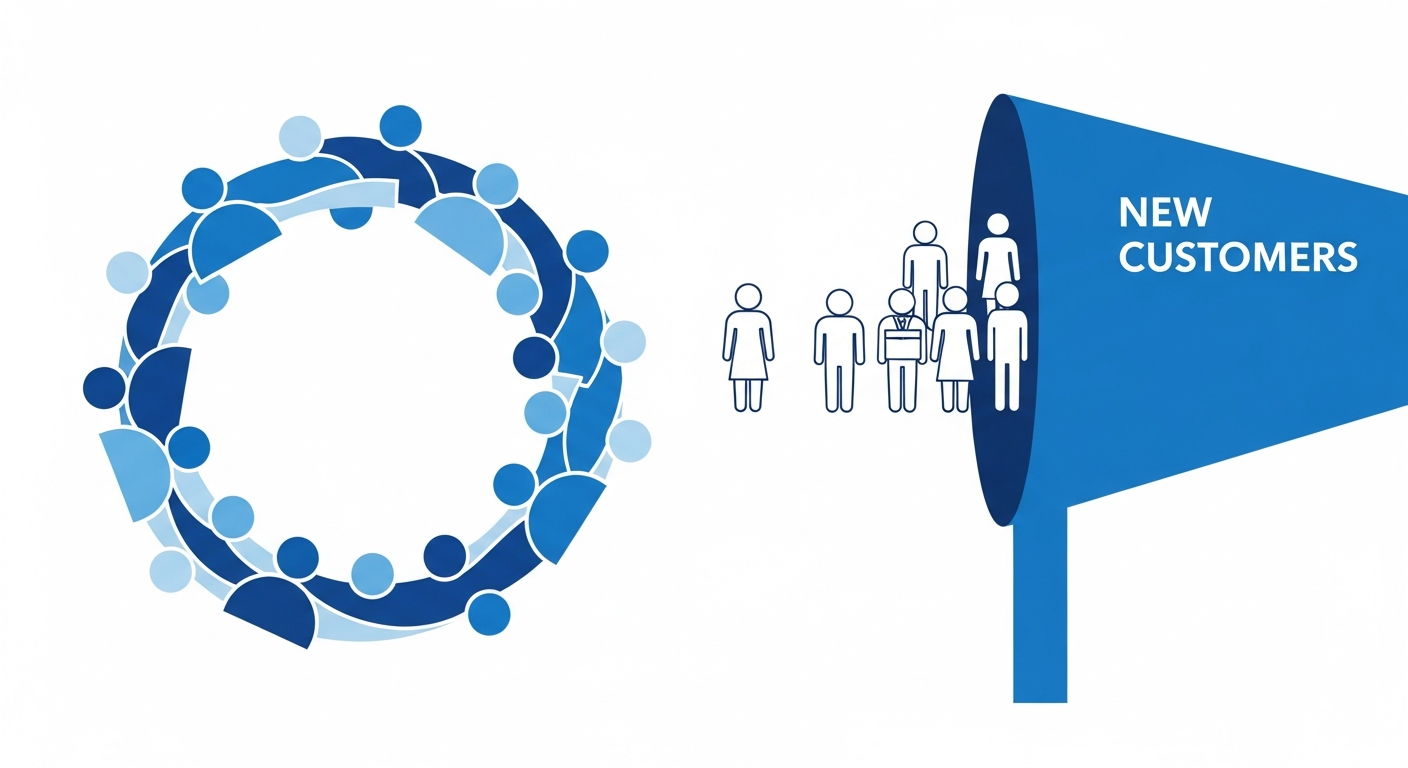
Here's a problem most ecommerce brands don't realize they have: Meta is spending a chunk of your ad budget on people who already bought from you.
Not because you told it to. Because the algorithm is optimizing for the cheapest conversions it can find — and your existing customers are easy wins. They know your brand. They buy again. Meta looks like a hero. Your blended numbers look fine.
But your new customer acquisition? It's either stalling or getting quietly more expensive, and your current dashboard won't tell you which.
Meta's new Customer Lifecycle Strategy was built to fix exactly this. And it's worth understanding — not because it's magic, but because it addresses a real structural problem with how Meta handles your budget by default.
Here's the honest breakdown: what the feature actually does, how to set it up, and what to expect when you turn it on.
Why Meta Keeps Spending Your Budget on Existing Customers
Before you can appreciate the fix, you need to understand the problem.
Meta's algorithm has one job: find the people most likely to convert at the lowest cost possible. That's it. That's the optimization target.
Existing customers fit that profile perfectly. They already know your brand. They're in your pixel's purchase event history. They respond to ads. They buy again — and they do it cheaply.
So when you run a broad "Sales" campaign and let Meta optimize freely, the algorithm naturally gravitates toward warm audiences. Not because it's trying to waste your budget, but because it's doing exactly what it was told: find cheap conversions.
The result is what some media buyers call the Breakdown Effect: your blended cost per purchase looks acceptable, but when you dig into new vs. returning customer splits, you find that a significant portion of your spend is going to people who probably would have bought again without being targeted. Your new customer acquisition cost is rising in the background, and your top-of-funnel is quietly starving.
This is a legitimate growth problem for any ecommerce brand that wants to scale. You can't build revenue on repeat purchases alone. You need a steady flow of new buyers entering the funnel.
What Meta's Customer Lifecycle Strategy Actually Is
Meta's Customer Lifecycle Strategy is a new ad set-level feature inside manual Sales campaigns. It gives you explicit control over who your budget is spent on, based on purchase history.
When you find it, you'll see two options:
"Reach new and existing customers" — the default. Meta blends prospecting and retargeting, optimizes across both, and generally finds cheap conversions wherever it can.
"Acquire new customers only" — Meta excludes your defined existing customers and focuses 100% of the budget on net-new acquisition.
The mechanism behind this is centralized customer exclusion. You define who counts as an "existing customer" at the account level (more on that in the setup section), and Meta uses that definition to filter those people out of any ad set where you've toggled on pure acquisition mode.
According to Meta, the feature "applies specialized treatments to enhance exclusion accuracy and maximize reach to net-new customers."
Here's the honest reality check: this is fundamentally smarter, centralized audience exclusion. It's not an AI system that magically identifies new customers based on behavioral signals. It's not going to predict who might buy from you and target them with uncanny precision. What it does is solve the operational headache of managing custom audience exclusions manually across every campaign and ad set — which was clunky, error-prone, and required constant updating.
That's still genuinely valuable. But go in with clear eyes about what you're getting.
How to Set It Up
The feature is currently in closed beta, so not every account has access yet. If you don't see the Customer Lifecycle section in your ad set setup, you're not in the test group — check back as Meta widens rollout through H2 2026.
If you do have access, here's the setup sequence:
Step 1: Define your existing customers at the account level.
This is the most important step. The exclusion is only as good as your customer definition. Build it from three sources:
→ Meta Pixel purchase events — anyone who has fired a Purchase event on your site is a strong signal of an existing customer. Make sure your pixel is tracking correctly and your event data is clean.
→ Conversions API (CAPI) data — if you have CAPI set up (which you should), you're sending server-side purchase events that fill gaps from browser tracking loss. This strengthens the matching accuracy.
→ Customer list uploads (LTV files) — upload your full customer purchase history as a CSV. This catches buyers who may not have been cookied via pixel, including anyone who bought before you installed tracking, or via channels that don't fire pixel events.
Don't skip the list upload. If you only rely on pixel events, you'll have gaps. The more complete your existing customer definition, the cleaner your "new customers only" acquisition will be.
Step 2: Navigate to the ad set level in a manual Sales campaign.
Advantage+ Shopping campaigns don't have this control yet. You'll need to be in a manual Sales campaign to access the Customer Lifecycle section.
Step 3: Toggle on "Acquire new customers only."
Find the Customer Lifecycle section in your ad set setup and select the acquisition mode. The centralized customer definition you built in Step 1 is automatically applied — no need to attach a custom exclusion audience manually.
Step 4: Shift your creative for cold traffic.
This step matters more than most people expect. When you flip to pure acquisition mode, every person who sees your ad is a stranger. That changes everything about how your creative should work.
More on that below.
What to Expect When You Turn This On
The first thing you'll notice is that your in-platform numbers will look worse.
Your ROAS will drop. Your cost per purchase will go up. This is expected — you've removed cheap retargeting conversions from the optimization pool. Don't panic, and don't read it as failure.
What you're actually doing is getting a clean, honest read on what it costs to acquire a brand-new customer. That number matters more for long-term growth than any blended ROAS figure that includes repeat buyers.
Early adopters of the feature report CPAs roughly 40% lower than traditional prospecting campaigns run without the exclusion control. The important distinction: these are true new customer CPAs, with zero spend reaching existing buyers. Compare that to your current blended CPA and the gap probably tells a story.
A few things to set up alongside this:
Run a separate retargeting campaign. Don't abandon your existing customer re-engagement. Just move it to a dedicated campaign where you can optimize for it directly and measure it cleanly. You want two distinct P&Ls, not a muddled blended view.
Give it time to optimize. Meta's algorithm needs conversion data to learn who converts in your new-customer-only pool. Don't kill it after a week because CPAs are higher than your blended benchmark. Compare against your true prospecting baseline, not your blended metrics.
Watch new customer acquisition rate, not ROAS. The metric that matters here is: how many new buyers did we add this week, and at what CAC? If that number is improving, the campaign is working.
The Creative Shift This Requires
Pure acquisition mode changes your creative brief fundamentally. Every person seeing your ad has zero prior relationship with your brand. That means:
Out: Bottom-funnel creative. Loyalty offers. "Welcome back" messaging. Discount-first hooks. Social proof that assumes brand familiarity ("our customers love us").
In: Cold-traffic-native creative. Educational hooks that introduce the product category, not just the brand. Founder story angles. Broad-appeal messaging that earns attention from someone who's never heard of you.
The biggest mistake brands make when they first run pure prospecting is leaving their retargeting creative in place. It's written for people who know you. New audiences don't have the context to respond to it.
This is also where the Andromeda algorithm's preference for creative diversity matters. If you're running pure new customer acquisition, you need more creative variety than you think — different hooks, different formats, different angles — because the audience pool is broader and less predictable. More on building for Andromeda here.
And one more thing: make sure your landing page experience matches cold traffic. If your page is built around existing customer signals (loyalty references, "back in stock" notifications, "you viewed this" personalization), it's going to underperform with brand-new visitors. Audit that before you scale spend.
Who Should Test This Now (And Who Should Wait)
Test it now if:
→ You're spending $10K or more per month on Meta and your prospecting campaigns feel like they're getting less efficient over time
→ You have a solid customer database and clean pixel/CAPI data — the exclusion is only as good as your customer definition
→ You've been frustrated that Meta keeps surfacing existing buyers in your "prospecting" campaigns even after manual exclusions
→ Your blended ROAS looks fine but your new customer count isn't growing
Wait if:
→ Your customer list is small (fewer than a few thousand verified purchasers) — the exclusion won't have much to work with and you may unnecessarily restrict your reach
→ You're running primarily Advantage+ Shopping campaigns — the feature isn't available there yet
→ Your pixel and CAPI aren't fully set up — garbage in, garbage out on the customer definition
→ You don't have dedicated retargeting infrastructure — don't abandon warm audiences without a plan to reach them separately
On availability: As of late June 2026, this feature is in closed beta. Not every account has it. If you don't see it, keep an eye on your Ads Manager — Meta is expected to expand rollout through the second half of 2026.
The Bottom Line
The brands that are going to win at new customer acquisition over the next 12 months are the ones who get serious about measuring it cleanly, not just optimizing for cheap blended conversions.
Meta's Customer Lifecycle Strategy isn't a silver bullet. It's a targeting control that removes a structural inefficiency in how the algorithm allocates budget by default. If you use it correctly — with clean data, cold-traffic creative, and a separate retargeting campaign running alongside — you'll finally have a clear number for what it actually costs to bring in a brand-new customer.
That number is the foundation of a scalable paid acquisition strategy. Everything else — budget allocation, creative investment, scaling decisions — should flow from it.
If you want to see how this fits your current Meta setup and whether it makes sense to test for your brand, book a strategy session. No pitch. Just a clear-eyed look at where your acquisition budget is actually going.
Related: iOS 19 Link Tracking Protection Is Breaking Meta Attribution — if your tracking infrastructure isn't solid, fix that before deploying customer lifecycle strategy.