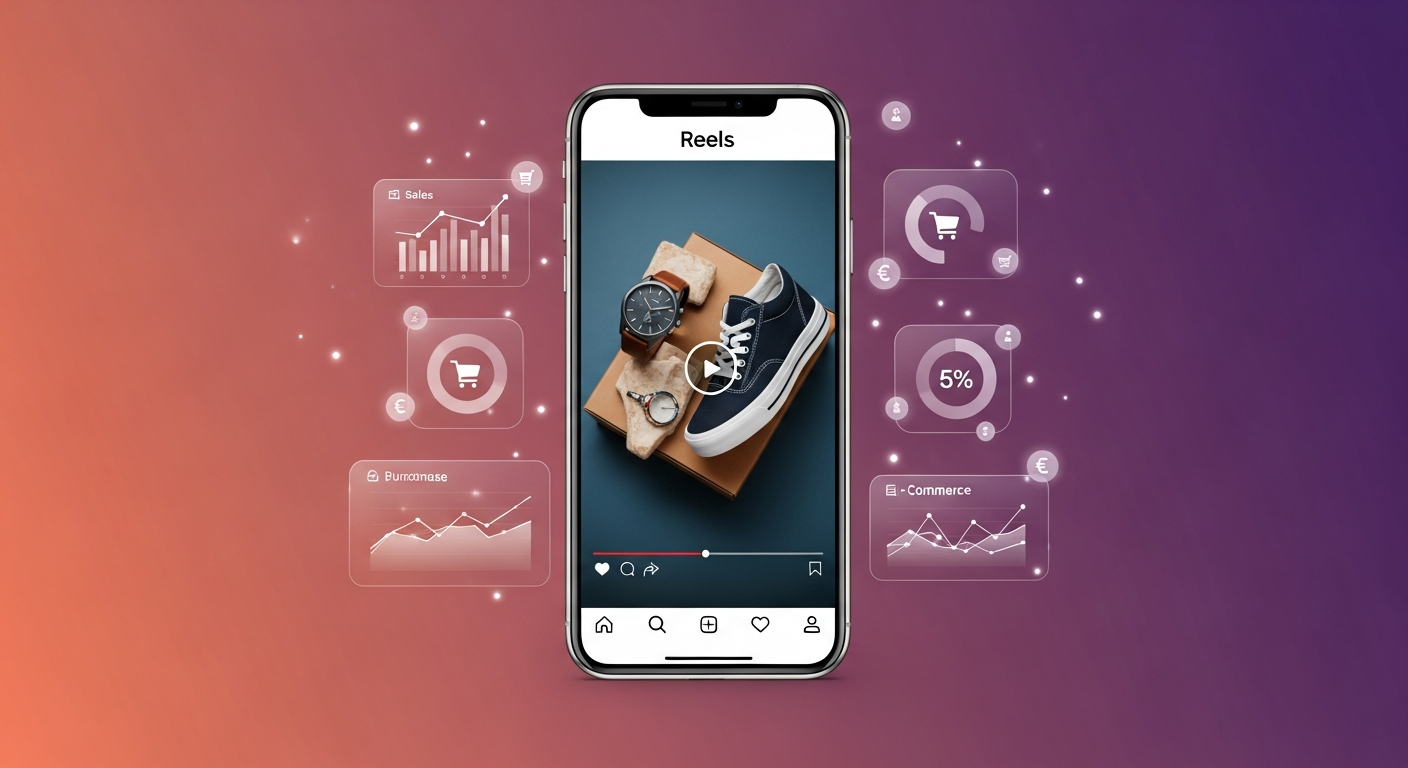
Meta’s own research shows that Reels drive 5.3x higher purchase intent compared to standard feed placements. That number has been floating around since Meta published their internal study — but most ecommerce brands still treat Reels as an afterthought.
Here’s the hard truth: if your creative strategy isn’t Reels-first in 2026, you’re leaving money on the table. Not because Reels are trendy, but because the data — and the algorithm — are both pointing in the same direction.
Let’s break down what that 5.3x number actually means, why it matters for your specific business, and exactly how to build a Reels-first creative pipeline that converts.
What the 5.3x Purchase Intent Data Actually Tells Us
First, let’s unpack the stat so you’re not just parroting a number without context.
Meta’s internal study measured purchase intent — the likelihood that a viewer would take a buying action — across different ad placements. Reels placements showed a 5.3x lift compared to standard in-feed static or carousel placements. The study controlled for advertiser, budget, and audience, isolating the placement as the variable.
What drives this lift:
- Full-screen immersion. Reels occupy 100% of the screen. There’s no competing content, no sidebar, no adjacent post. When someone’s watching your Reel, you have their full attention — for a few seconds, at least.
- Sound-on by default. Unlike feed placements where 85%+ of users scroll with sound off, Reels viewers typically have sound on. This means your audio strategy (music, voiceover, ASMR product sounds) actually reaches people.
- Native behavior patterns. Users in the Reels tab are in consumption mode — they’re actively watching content, not passively scrolling. The mental state is closer to “entertainment and discovery” than “checking up on friends.” That discovery mindset is where purchase intent lives.
- Algorithm prioritization. Meta’s Andromeda engine gives preferential delivery to Reels content. This isn’t speculation — Meta has publicly stated they’re prioritizing short-form video across both Instagram and Facebook. Your Reels ads enter a distribution environment that’s actively favored by the platform.
The caveat: 5.3x purchase intent doesn’t mean 5.3x conversions. Purchase intent is an upper-funnel metric. The downstream conversion rate depends on your landing page, your offer, your price point, and your checkout experience. But higher intent = warmer traffic = lower CPA at scale.
Why Most Ecommerce Brands Are Doing Reels Wrong
We audit 50+ Meta ad accounts per year across fashion, swimwear, health, and natural products verticals. Here’s the most common pattern we see:
- Brand creates a polished product video for feed placement
- Someone crops it to 9:16 and calls it a “Reels ad”
- It underperforms in Reels placement
- Brand concludes “Reels don’t work for us”
That’s not a Reels problem. That’s a creative problem.
Reels-native content follows different rules than feed content. The hook window is shorter (you have 1-2 seconds, not 3-4). The pacing is faster. The tone is more authentic and less produced. And the format rewards content that feels like it belongs in the Reels feed — not content that was obviously repurposed from somewhere else.
Here’s what separates Reels that convert from Reels that get skipped:
The 3-Second Rule
In Reels, your first 3 seconds determine everything. If you don’t hook the viewer by second 3, they swipe. Meta’s algorithm watches this closely — if your Reels ad has a high swipe-away rate in the first 3 seconds, the algorithm deprioritizes it and your CPM spikes.
Hooks that work for ecommerce Reels:
- The product reveal: Start with the product in motion. Unboxing, product drop, color reveal. Immediate visual payoff.
- The problem statement: “Your skincare routine is probably doing more harm than good.” Stops the scroll with a direct challenge.
- The before/after (compliant): Show the transformation without making health claims. A styled outfit before → after. A kitchen counter organized with your products.
- The pattern interrupt: Something unexpected in the first frame. An unusual camera angle, a bold text overlay, a surprising action.
What doesn’t work: Your logo. A text card introducing your brand. A slow pan across your product line. Any of these as your opening frame and you’ve already lost.
The 15-30 Second Sweet Spot
Meta’s data shows that Reels ads between 15-30 seconds perform best for ecommerce conversions. Shorter than 15 seconds doesn’t give enough time to build a persuasive case. Longer than 30 seconds and you lose the casual Reels viewer.
The ideal Reels ad structure for ecommerce:
- 0-3 seconds: Hook (problem, reveal, or pattern interrupt)
- 3-10 seconds: Show the product in context (being used, being worn, being applied)
- 10-20 seconds: Social proof or key benefit (review quote, feature callout, before/after)
- 20-30 seconds: CTA (soft or direct — “Link in bio” or “Shop now”)
Native Over Produced
The highest-performing Reels ads we’ve run across ecommerce accounts share one trait: they look like organic content that happens to be an ad.
This doesn’t mean low quality. It means:
- Shot on a phone (or shot on professional equipment but edited to look phone-quality)
- Natural lighting preferred over studio lighting
- Real people using the product (UGC) over product-on-white photography
- Text overlays using native Reels fonts, not custom brand fonts
- Trending audio or original voiceover, not corporate music
The ecommerce brands that get this right — particularly in fashion and beauty — are seeing 30-50% lower CPAs on Reels placements compared to their feed placements. That gap alone is worth rebuilding your creative pipeline around.
The Reels-First Creative Pipeline: How to Build It
Knowing that Reels work is one thing. Actually producing enough Reels content to feed Meta’s algorithm is the operational challenge. Here’s the system we use with our clients:
Step 1: The Content Sprint (Monthly)
Once a month, batch-produce 15-20 raw video clips. These aren’t finished ads — they’re raw material.
For fashion/swimwear brands:
- 5 try-on clips (different models, different settings)
- 5 product detail shots (fabric close-ups, color reveals, packaging)
- 3 lifestyle clips (wearing the product in context — beach, city, gym)
- 2-3 UGC clips (customers or micro-influencers)
For health/natural product brands:
- 5 product-in-use clips (applying, mixing, consuming)
- 5 ingredient/benefit callout clips (text overlay + product shot)
- 3 routine integration clips (showing the product in a daily routine)
- 2-3 testimonial/review clips
Step 2: The Edit Matrix (Weekly)
Take your raw clips and create 3-4 variations per clip by changing:
- The hook (different first 3 seconds)
- The text overlay (different benefit or angle)
- The audio (trending sound vs. voiceover vs. no audio)
- The CTA (shop now vs. learn more vs. link in bio)
This gives you 45-80 unique Reels ad variations per month from a single content sprint. That’s more than enough creative diversity to feed Meta’s algorithm properly.
Step 3: The Testing Framework (Ongoing)
Upload 5-8 new Reels creatives per ad set every 2 weeks. Use the first week to let Meta’s algorithm distribute delivery and identify early winners. In week two, use Push Delivery on your top performer to amplify it while you prep the next batch.
Key metrics to track for Reels ads:
| Metric | Good | Great | Action If Below |
|---|---|---|---|
| Hook rate (3-sec views / impressions) | 25%+ | 35%+ | Rework first 3 seconds |
| ThruPlay rate (15-sec+ views / impressions) | 15%+ | 25%+ | Tighten pacing, cut length |
| CTR (link clicks) | 1.0%+ | 1.5%+ | Stronger CTA, better offer |
| Cost per Purchase | Below target CPA | 30%+ below target | Scale budget |
| Frequency | Under 2.0 | Under 1.5 | Rotate creative |
Step 4: Scale Winners, Kill Losers (Ruthlessly)
After 3-5 days of data, you’ll know which Reels are working. The ones hitting above your ROAS threshold get more budget. The ones below get paused — not “given another week.” Creative decisions should be data-driven and fast.
Graduate winning Reels creatives from testing campaigns into your Tier 1 broad/ASC campaigns where they can scale with bigger budgets and broader audiences.
How This Connects to Your Broader Meta Strategy
Reels-first creative isn’t a standalone tactic. It’s the creative layer that makes everything else in your Meta ads strategy work better:
- Targeting becomes less important when your creative is doing the segmentation (different Reels hooks attract different buyer segments). We covered this in the 2026 targeting playbook.
- ROAS improves when your cost-per-impression drops (Reels placements typically have 20-40% lower CPMs than feed).
- Testing velocity increases when you have a batch production system instead of one-off creative requests.
- Attribution becomes clearer when you can tie specific Reels to specific conversion events through proper CAPI setup.
The brands winning on Meta in Q2 2026 aren’t running static images with clever copy. They’re running Reels-native video that feels like content, converts like advertising, and scales because the algorithm rewards it.
Your Next Move
If you’re spending $5K+ per month on Meta ads and your Reels creative is still an afterthought — or worse, just cropped feed content — you’re overpaying for every conversion.
The fix isn’t complicated. It’s operational: build the content pipeline, follow the testing framework, and let the data tell you what works.
Want us to build your Reels-first creative strategy? Book a strategy session and we’ll audit your current creative pipeline, identify the gaps, and map out a Reels-first system built for your vertical. No fluff. Just the plan.