Meta’s Mandatory Monthly Invoicing: What Ecommerce Brands Must Do Before April 1
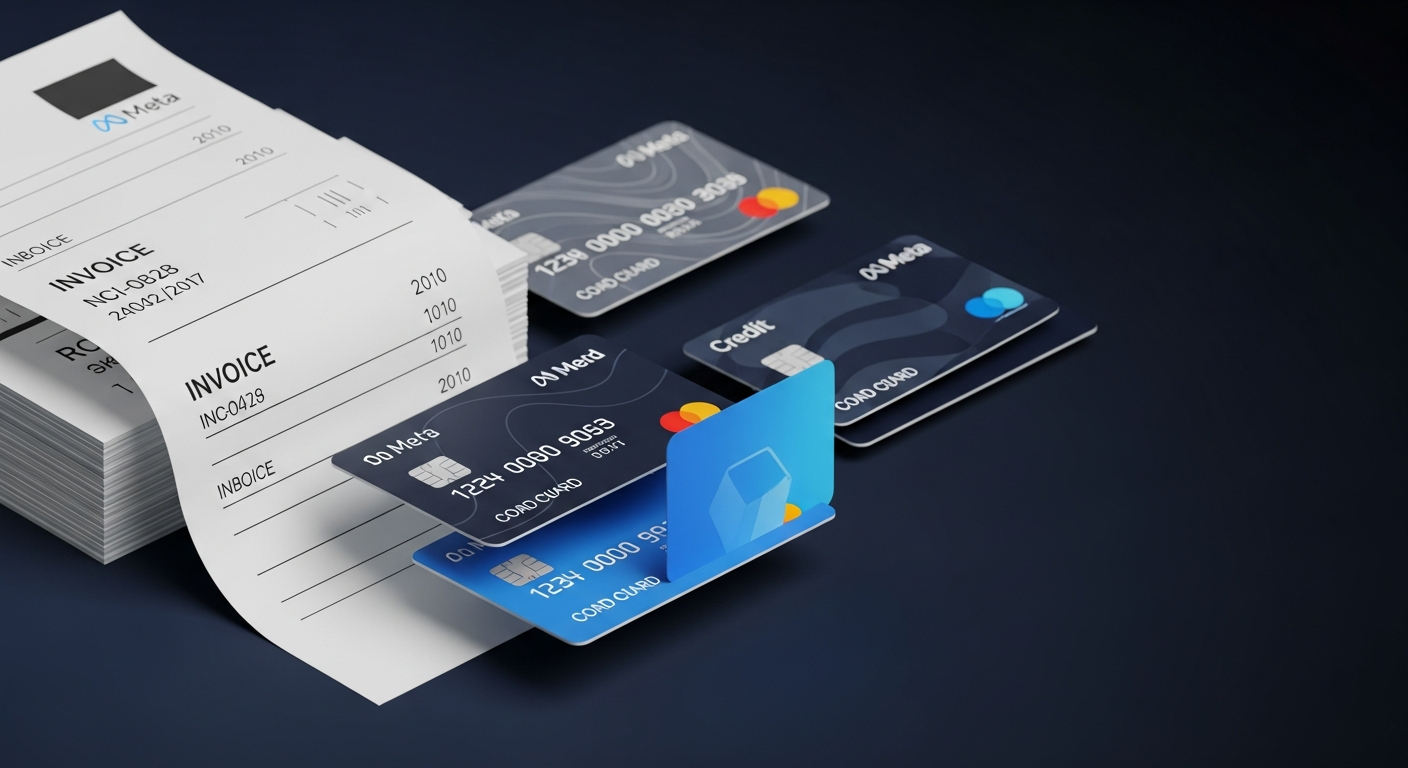
If you run Meta ads for an ecommerce brand, you probably got the email last week. Or maybe you saw the banner in Ads Manager. Either way, the message is the same: Meta is removing credit card payments for high-spend ad accounts, and you have until March 31, 2026, to switch to monthly invoicing or direct debit.
Miss that deadline, and your ads pause on April 1. No grace period. No exceptions.
This isn’t just a billing settings update. For ecommerce brands spending $30K, $50K, or $200K+ per month on Meta ads, this is a cash flow event that changes how you plan budgets, manage agency relationships, and forecast profitability for the rest of 2026.
Here’s everything you need to know — and exactly what to do about it.
What’s Actually Happening (And Why It Matters More Than You Think)
Starting April 1, 2026, Meta will no longer accept credit or debit cards as a payment method for affected ad accounts. The notifications started rolling out on February 26, and the transition window officially opened on March 2.
You now have two options:
- Monthly invoicing — Meta extends a credit line based on your account history. You get a single bill each month with Net 30 payment terms.
- Direct debit — Funds are automatically withdrawn from a linked bank account each billing cycle. Currently available in the US and SEPA regions only.
That’s it. No credit cards. No debit cards. No PayPal workaround.
Meta’s official reasoning? “Predictable billing and fewer payment interruptions.” Translation: they’re cutting out the 1.5% to 3.5% interchange fees they’ve been eating on every credit card transaction. When you’re processing billions in ad payments monthly, that’s a significant cost reduction — for Meta.
For advertisers? It’s a different story.
The Real Financial Impact for Ecommerce Brands
Let’s be honest about what’s being lost here, because it’s not trivial.
The Credit Card Rewards Math
Most ecommerce brand owners running serious Meta ad spend have optimized their payment stack. Business credit cards offering 2% to 3% cash back on advertising spend aren’t just perks — they’re line items in your unit economics.
Here’s what this change actually costs at different spend levels:
| Monthly Ad Spend | Annual Rewards Lost (2%) | Annual Rewards Lost (3%) |
|---|---|---|
| $30,000 | $7,200 | $10,800 |
| $50,000 | $12,000 | $18,000 |
| $100,000 | $24,000 | $36,000 |
| $200,000 | $48,000 | $72,000 |
For a fashion brand spending $50K/month on Meta, that’s $12,000 to $18,000 per year that just disappeared from your bottom line. Some brands we’ve talked to had stacked rewards strategies pushing 4% to 4.5% effective cash back. Those strategies are dead.
The Cash Flow Timing Shift
Beyond rewards, there’s a subtler but equally important change: your cash flow timing is shifting.
With credit cards, most brands enjoyed a 21 to 30 day float — you’d spend on ads, the statement would close weeks later, and you’d have another 21 days to pay. That float gave ecommerce brands breathing room, especially during heavy spend periods.
Monthly invoicing sounds similar on paper (Net 30 terms), but the timing depends entirely on when Meta issues your invoice and when your payment clears. It’s less predictable than the credit card cycle you’ve built your cash management around.
How This Hits Fashion vs. Health Brands Differently
Fashion and swimwear brands feel this most acutely because of seasonality. If you’re scaling spend aggressively for spring/summer collections or Q4 holiday pushes, losing your credit card float means you need more cash reserves or alternative financing in place before those ramp periods. The math changes on every seasonal scaling decision.
Health and natural product brands typically run more consistent, evergreen spend — but many are already dealing with tighter margins from Meta’s expanded ad restrictions on health claims. Adding a billing structure change on top of compliance headaches compounds the operational load.
Agency Billing Implications
If you work with a Meta ads agency (like us), the billing change affects that relationship too. Many agencies manage billing across multiple client accounts within a Business Manager. The monthly invoicing credit line is assigned per account, and your agency needs to coordinate credit line requests and payment timing across all the accounts they manage.
Ask your agency how they’re handling this transition. If they haven’t mentioned it yet, that’s a red flag.
Monthly Invoicing vs. Direct Debit: Which Should You Choose?
Both options work, but they serve different needs.
Monthly Invoicing
- How it works: Meta assigns a credit line based on your account’s spending history. You spend up to that limit, receive one invoice at the end of the billing period, and have 30 days to pay.
- Best for: Brands with consistent high spend who want to manage cash flow actively. You control when you pay (within the 30-day window).
- Watch out: If your spend exceeds your credit line mid-month, your ads pause until you make a payment or Meta increases your limit. For brands scaling into peak seasons, this can be dangerous.
Direct Debit
- How it works: Meta automatically withdraws from your linked bank account on the billing date. One payment per month, no manual action needed.
- Best for: Brands that want zero friction and don’t mind automated withdrawals. Good for teams without dedicated finance staff.
- Watch out: Less cash flow control. The money leaves your account on Meta’s schedule, not yours. Available only in the US and SEPA regions.
Our Recommendation
For most ecommerce brands spending $30K+/month: go with monthly invoicing. The 30-day payment window gives you more control over cash flow timing, and you can set up autopay as a backup if you want the convenience of direct debit without losing the flexibility.
The critical step is negotiating your credit line — more on that below.
Your Step-by-Step Action Plan (Before March 31)
Here’s exactly what to do, in order:
1. Check If You’re Affected
Log into Meta Business Suite or Ads Manager. Look for:
- A black notification banner in your billing settings
- An email from Meta (check spam — these often land there)
- An alert in the “Billing and Payments” section
Important: Only users with “Full control” or “Manage finance” permissions can see these notifications. If you’re the brand owner but your agency manages the account, ask them to check.
2. Choose Your Payment Method
Based on the comparison above, select monthly invoicing or direct debit. For most ecommerce brands, we recommend monthly invoicing for the cash flow flexibility.
3. Negotiate Your Credit Line
This is the step most brands will skip — and it’s the most important one.
Meta assigns your initial credit line based on account history, but it’s not necessarily set at what you need. If you’re planning to scale spend for Q2 or Q3, request a higher credit line now. Contact your Meta account representative directly, or submit a request through the platform.
Pro tip: If your account has a strong payment history and consistent spend over the last 6-12 months, you have leverage. Use it.
4. Update Your Financial Forecasting
Your unit economics spreadsheet needs a revision. Specifically:
- Remove credit card rewards from your effective ROAS calculations
- Adjust cash flow projections for the new billing timing
- Factor in the lost float period when planning seasonal scaling budgets
- If you’re using credit card rewards to offset other business costs, find that margin elsewhere
5. Brief Your Agency or Team
If you work with an agency, have a direct conversation about:
- How they’re managing the transition across client accounts
- Whether your credit line is sufficient for planned spend levels
- How invoice payments will be handled (who pays, when, from which account)
- Whether their agency fee structure accounts for the lost rewards
6. Note the Billing Freeze Window
Meta has confirmed that billing settings cannot be changed between March 30 and April 4. That means if you haven’t made the switch by March 29, you’re cutting it extremely close. Don’t wait.
The Strategic Opportunity Most Brands Will Miss
While everyone’s focused on what they’re losing, there’s an angle worth considering.
Monthly invoicing with a 30-day payment window is essentially a free 30-day credit line from Meta. If you manage it well, you can use that window to your advantage — spending on ads today and not paying until 30 days after the invoice, which could be 45-60 days after the actual ad spend.
That’s meaningful working capital for an ecommerce brand.
The key is making sure your credit line is high enough to cover your peak spend without your ads getting paused. Brands that negotiate aggressively on credit lines and plan their payment timing strategically will come out ahead compared to those who just panic-switched to direct debit and forgot about it.
Brands with established agency relationships also have an advantage here. Agencies that manage multiple high-spend accounts often have direct contacts at Meta who can expedite credit line increases and resolve billing issues faster than the standard support channel.
What This Means for Your Q2-Q4 Planning
This billing change isn’t happening in a vacuum. It’s landing right as ecommerce brands are finalizing Q2 strategies and starting to plan for Q4.
For fashion and swimwear brands: Your spring/summer scaling period is weeks away. Make sure your credit line can handle the ramp-up. If you typically increase spend 2-3x during peak collection launches, your credit line needs to reflect that — not your average monthly spend.
For health and natural product brands: If you’re planning product launches in Q2 or Q3, coordinate your launch spend projections with your new credit line limits. The last thing you want is ads pausing mid-launch because you hit a credit cap.
For all ecommerce brands: Update your financial models. The loss of credit card rewards isn’t catastrophic, but ignoring it compounds over time. A brand spending $100K/month that doesn’t adjust its unit economics is leaving $24K-$36K per year unaccounted for. That’s the difference between a profitable Q4 and a break-even one.
Don’t Let a Billing Change Derail Your Growth
This is a manageable change if you act now. The brands that will get hurt are the ones who ignore the notifications, miss the March 31 deadline, and have their ads pause on April 1 — right when Q2 campaigns should be ramping.
Take 30 minutes this week to check your billing settings, choose your payment method, and negotiate your credit line. Future you will be grateful.
Need help navigating this transition — or want a second set of eyes on your Meta ads strategy heading into Q2? Book a free strategy call with our team. We manage Meta ads for ecommerce brands in fashion, swimwear, and health/natural products, and we’ve already transitioned every client account to the new billing structure.
Dash Activate Online is a Meta ads agency specializing in ecommerce brands in fashion/swimwear and health/natural products. We help brands scale profitably from $500K to $5M+ in revenue.