
There's a new line item coming for your Meta ad spend, and most ecommerce brands won't see it until it's already cost them money.
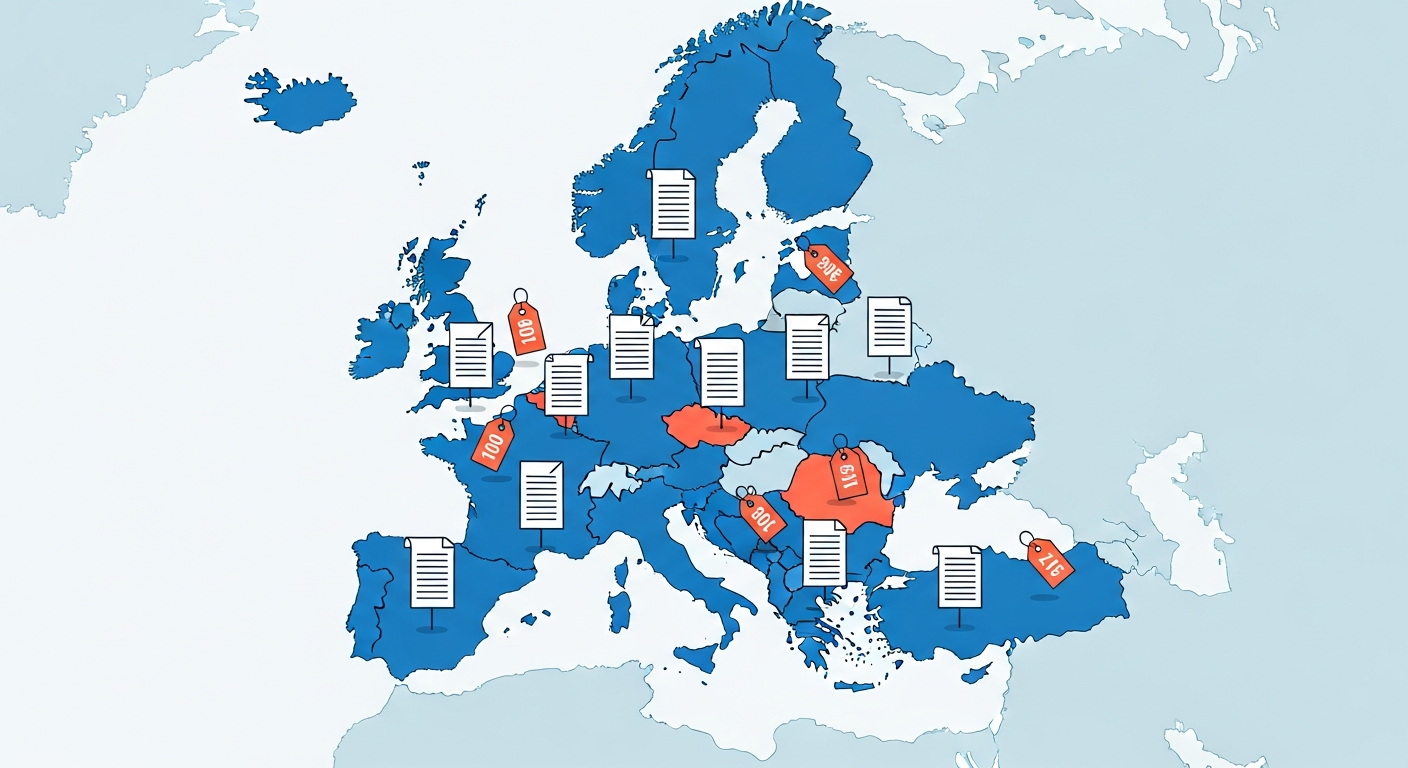
Starting July 1, Meta is applying location fees — a surcharge of roughly 2–5% on impressions served in a set of European markets. If you sell to customers in Austria, France, Italy, Spain, Turkey, or the UK, this hits you. And here's the part that catches operators off guard: it applies even if your business is based in the US. What matters isn't where you are — it's where your ad gets shown.
With the deadline weeks away, this is the rare platform change that rewards acting early. Here's exactly what's happening and what to do before July 1.
What the Location Fees Are
Meta is introducing a regulatory surcharge tied to where your impressions are delivered. Ads shown to users in the affected European markets carry an added fee of approximately 2–5% on top of your existing media cost.
The fee exists because of regulatory and tax pressure in those regions — Meta is passing a cost of doing business in those markets back to advertisers. You don't opt in or out. If your campaigns deliver impressions in a covered country, the surcharge attaches to that spend automatically.
The affected markets at launch:
→ Austria
→ France
→ Italy
→ Spain
→ Turkey
→ United Kingdom
If a meaningful share of your customers — or your prospecting reach — sits in any of these, your effective cost per impression is about to rise.
Why US-Based Brands Aren't Exempt
This is the single biggest misconception, so it's worth being blunt: the fee follows the impression, not the advertiser.
A US ecommerce brand running broad campaigns that spill into the UK and EU will pay the surcharge on every one of those European impressions. A brand that ships internationally and actively targets European buyers will pay it on a large chunk of its spend. Being headquartered in Ohio doesn't shield you — if Meta serves your ad to someone in Madrid, the Madrid surcharge applies.
So the question isn't "am I a European company?" It's "how much of my delivery lands in these six markets?" For a lot of brands that have never bothered to check, the answer is more than you think — especially if you run broad, Advantage+ style campaigns that let Meta deliver wherever it finds efficiency.
The Hidden Problem: These Fees Are Invisible in Ads Manager
Here's what makes this change genuinely dangerous rather than just annoying: the location fees don't show up in Ads Manager. They appear on your invoices.
That means your day-to-day dashboards — the CPMs, the CPAs, the ROAS numbers your media buyer watches — won't reflect the surcharge. Your in-platform metrics will look the same as always. Then your bill arrives 2–5% higher than your reporting suggested, and the gap quietly eats margin you didn't budget for.
For brands running tight unit economics, this is exactly the kind of invisible cost that breaks a model without anyone noticing for a month or two. Your blended CAC creeps up. Your contribution margin slips. And because the leak lives on the invoice, not the dashboard, the people optimizing the account never see the cause.
The fix is process, not panic: reconcile your actual Meta invoices against your Ads Manager spend every month, and start doing it now so you have a clean baseline before July 1.
What to Do Before July 1
You have a short runway. Use it to get ahead of the fee instead of absorbing it blind.
1. Measure your European exposure. Break down your delivery by country for the last 60–90 days. Figure out what percentage of your impressions and spend land in the six affected markets. This number tells you how big a deal this actually is for your account — for some brands it's a rounding error, for others it's thousands a month.
2. Recalculate your margins on affected spend. Take a 2–5% surcharge and run it through your unit economics on the European portion of your budget. If a market was already marginal at your current CAC, the fee may push it underwater. Know that before the invoice tells you.
3. Decide where the fee is worth paying. This isn't automatically a reason to pull out of Europe. If the UK drives strong, profitable revenue, a 2–5% surcharge is a cost of doing business — absorb it and move on. The point is to make that an intentional decision, market by market, not a surprise.
4. Tighten geo controls where it doesn't pay. If broad campaigns are leaking spend into European markets you don't actually sell to or ship to, that leak just got more expensive. Audit your geo settings. Exclude markets you don't serve. This is good hygiene regardless — the fee just makes it urgent.
5. Set up invoice reconciliation. Build a simple monthly check comparing invoiced spend to Ads Manager spend. Once the fees hit, this is the only place you'll see them. Don't let your reporting and your actual costs drift apart.
The Bigger Picture for Ecommerce Operators
Location fees are part of a broader pattern: the era of one flat, predictable cost of advertising on Meta is ending. Regulatory surcharges, regional fees, and compliance-driven costs are becoming a normal part of the equation — and they tend to show up on invoices, not dashboards.
The operators who handle this well aren't the ones who memorize every fee. They're the ones with the discipline to reconcile actual costs against reported metrics, market by market, every month. That's what turns an invisible 2–5% leak into a known, managed line item.
July 1 is close. Pull your country-level delivery report this week, run the margin math, and decide — deliberately — where European reach is worth the new price of admission. Do that now, and the deadline is a non-event. Ignore it, and you'll find out the hard way, one invoice at a time.
Ready to Scale Your Ecommerce Ads?
If you’re spending $10K+ on Meta ads and want an agency that actually knows ecommerce — book a free strategy call. We’ll audit your account and show you where the growth is.